
How to Master Food Tracking Without Stress: The 2026 Guide
Jul 16, 2026 · 15 min read · 3,210 words

What if the secret to reaching your fitness goals wasn't more discipline, but less manual data entry? With nearly 200 million people globally using nutrition apps in 2026, the friction of food tracking is a common hurdle. Most of us start with high energy but eventually hit a wall of decision fatigue or guilt over a single missed day. It's a cycle that often prioritizes perfection over sustainable progress.
We understand that life isn't static. Your nutritional needs on a heavy lifting day aren't the same as on a rest day, and trying to force-fit your life into a rigid spreadsheet is a recipe for burnout. You're looking for a way to stay consistent without the mental load of constant logging and manual calculations. It's time to move toward a more intuitive, automated way of managing your health.
This guide teaches you how to master food tracking as a streamlined, stress-free tool for your specific goals. You'll learn how to move past the macros vs. calories debate and embrace an adaptive approach that fits your lifestyle. We'll show you how to leverage smart technology to handle the planning, so you can focus entirely on the results.
Key Takeaways
- Shift your mindset from perfection to progress by learning why 80% consistency is the real secret to long-term results.
- Focus on the high-impact nutrition hierarchy that drives muscle gain and weight loss without the data overwhelm.
- Master food tracking without the manual fatigue by using adaptive systems that sync with your training schedule.
- Implement a "Minimum Viable Log" to maintain your habits during high-stress weeks without the burnout.
- Eliminate decision fatigue with 24/7 AI coaching that provides instant, personalized answers for your meal planning.
Table of Contents
The Psychology of Food Tracking: Why Most People Quit
Most people view a food log as a report card. If the numbers are "red," they feel like they've failed a test. This is the first mistake. Effective food tracking is a tool for awareness, not a test of your character. It's a mirror, not a judge. When you stop attaching your self-worth to a calorie count, the stress begins to melt away. You're just collecting data to help "future you" make better decisions.
We often fall into the "all-or-nothing" mindset. You miss one meal or one day, and suddenly the whole week feels ruined. This perfectionism trap is a progress killer. In reality, 80% consistency beats 100% accuracy every single time. Why? Because 80% is sustainable. It allows for the occasional pizza night or the forgotten snack without triggering a total collapse of your habits. Consistency creates the feedback loop you need to see real results.
Manual fatigue is the silent killer of health goals. Entering every single ingredient by hand is exhausting. It's the primary reason users stop logging within the first few weeks. If the process feels like a second job, you won't do it. The goal is to lower the barrier to entry so the data flows in without the mental drain.
The Problem with Static Targets
Traditional methods give you one calorie number for the whole week. That's an outdated approach. Your body's needs change based on your movement. A single, rigid goal ignores the reality of high-activity days versus rest days. When you try to stick to a low target after a heavy workout, you're fighting your own biology. This leads to a "failure" spiral that has nothing to do with your willpower. Modern food tracking should account for metabolic adaptation and activity levels, ensuring you're never under-fueled or over-stressed.
Shifting from Ledger to Learning
Stop treating your log like a financial ledger and start treating it like a laboratory. Use your data to find patterns. Do you reach for sugar every Tuesday at 3 PM? That's likely an emotional trigger, not a hunger cue. Tracking helps you uncover these habits. It also reveals "hidden" calories in dressings or sauces that might be stalling your progress. To do this effectively, it helps to understand the fundamentals of food composition data. Knowing how nutrients are measured gives you the power to make informed swaps. You move from a mindset of "restricting" what you love to "fueling" what your body needs to perform.
Decoding the Data: What Actually Matters for Your Goals
Data can be overwhelming. Some apps track nearly 100 different nutrients, but this often leads to "analysis paralysis." You don't need to be a scientist to see results. Effective food tracking starts with a clear hierarchy of importance. At the base is energy balance; your total calories determine if you lose, gain, or maintain weight. Once the calories are set, you look at macronutrients to determine the quality of that weight change. Timing and supplements are the final 5% that you only worry about once the foundation is solid.
Stop labeling food as "good" or "bad." These moral labels create unnecessary stress and often lead to the perfectionism trap we discussed earlier. A cookie isn't "bad" data; it's just a source of carbohydrates and fats. When you view food as information, you can fit your favorite treats into your plan without guilt. This approach keeps you consistent because it mirrors how you actually live.
Protein is your most important anchor. The 2025-2030 Dietary Guidelines recently emphasized an increased recommended dietary allowance for protein to support muscle health. If you are in a calorie deficit, hitting your protein target is what prevents your body from burning muscle for energy. Tracking ensures you aren't just losing weight, but losing the right kind of weight to keep your metabolism strong.
The Role of Macronutrients
Think of macros as your body's building blocks. Protein handles satiety and muscle repair. Carbohydrates are your primary fuel source for high-intensity workouts and brain function. Fats are essential for absorbing vitamins and keeping your hormones in balance. A balanced approach ensures you feel as good as you look. If you aren't sure where to start, an adaptive nutrition tracker can calculate these targets for you based on your specific body data and training schedule.
Micronutrients and Fiber
While calories and macros drive the big changes, micronutrients and fiber keep the engine running smoothly. High-fiber foods, like leafy greens and berries, allow for "volume eating." You can eat a larger physical amount of food for fewer calories, which naturally reduces hunger. This makes food tracking feel less like a restriction and more like a strategy for staying full.
Don't stress over the difference between tracking a whole apple and a processed snack. Focus on nutrient density most of the time. Whole foods generally provide more vitamins and minerals per calorie. However, processed items often have barcodes that make logging faster. Use both to your advantage. The goal is a sustainable mix that keeps you moving toward your target without the mental burnout of manual entry.
Beyond Manual Entry: The Rise of AI-Driven Nutrition
The era of the "digital ledger" is ending. In 2026, AI-powered trackers captured 38% of new app downloads for a reason. Traditional food tracking often feels like a chore because it's reactive. You eat, you log, and you hope you stayed within a rigid, pre-set limit. But your health isn't a static spreadsheet. The rise of AI-driven nutrition has transformed tracking from a passive record into an active, adaptive coaching tool. Instead of a "PDF diet" that sits in your inbox gathering dust, you now have a plan that breathes and evolves with you.
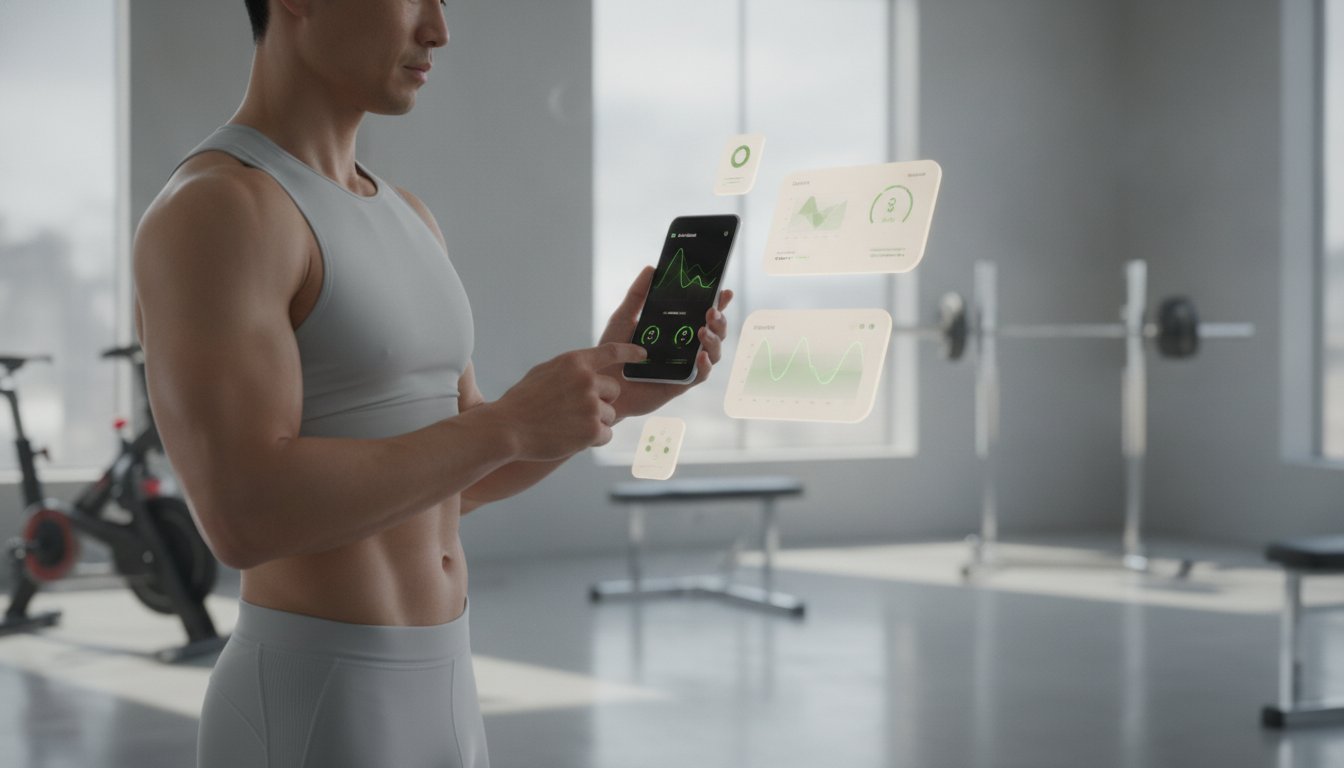
By syncing with Apple Health or Health Connect, modern systems see your steps, your sleep, and your recovery. They know if you've had a grueling session or a sedentary day at the office. This connectivity allows for a holistic view of your wellness that manual logs simply can't match. It moves the hard work of analysis to the background, leaving you to focus entirely on your actions.
Adaptive Calorie Targeting
Your body's energy needs aren't the same on a heavy leg day as they are on a Sunday afternoon spent on the couch. Static trackers often cause stress because they make you feel like you're "failing" on active days when your hunger naturally spikes. AI solves this through adaptive calorie targeting. It automatically scales your goals up when you're training and down when you're resting. This accounts for the science of metabolic adaptation, ensuring your targets stay aligned with your actual energy expenditure. It also helps you focus on weekly averages rather than daily perfection, which significantly reduces the burnout associated with food tracking.
Context-Aware AI Coaching
Imagine being at a Mexican restaurant and feeling paralyzed by the menu. Instead of guessing or giving up, you can simply ask your AI coach for guidance. "I'm at a Mexican restaurant, what fits my macros?" The coach analyzes your remaining targets for the day and provides a specific recommendation. This is context-aware support that removes the friction from social eating.
TotaCoach Pro takes this a step further by using your personal history to offer tailored advice. It's like having a high-level nutritionist in your pocket 24/7, but without the $300 monthly fee. Whether you need a form tip for your personalized workout plan or a quick answer to a nutrition question, the support is instant. This eliminates the decision fatigue that usually leads to quitting, making consistency the path of least resistance.

The Stress-Free Food Tracking Checklist
Consistency is built on systems, not willpower. To make food tracking a permanent part of your lifestyle, you need a workflow that respects your time. Follow this five-step checklist to streamline your process and eliminate the friction that leads to burnout.
- Step 1: Set a "Minimum Viable Log." Focus on your primary meals first. If you're short on time, log the chicken and rice but skip the garnish. Capturing the big caloric drivers gets you 90% of the way there.
- Step 2: Use "Frequent Foods" and "Recipe Creators." Most of us eat the same 10 to 15 meals on repeat. Save these as custom recipes in your app. One tap can log an entire complex meal in seconds.
- Step 3: Log your day in advance. Decision fatigue is highest at the end of the day. Spend five minutes every evening logging your meals for the next day. It turns your tracker into a roadmap rather than a post-mortem.
- Step 4: Focus on weekly averages. A single high-calorie day is just a data point. Look at your seven-day rolling average to see if you're actually trending toward your goal.
- Step 5: Audit progress every 14 days. Give your body time to respond to changes. Every two weeks, review your data and let the AI adjust your targets based on your actual results.
Time-Saving Hacks for Busy People
Speed is the antidote to manual fatigue. If you're in a rush, use the "Photo First, Log Later" strategy. Snap a quick picture of your plate and enter the details when you have a spare minute. Don't waste energy tracking every single spice, black coffee, or leaf of lettuce. These items have negligible calories and only add to your mental load. For everything else, leverage barcode scanners to instantly import data for packaged essentials. You can start building your streamlined library today with a nutrition tracking dashboard that does the heavy lifting for you.
Managing the "Off-Track" Days
Life happens. An unexpected dinner out or a celebration shouldn't trigger a "failure" spiral. Use the "Never Miss Twice" rule. If you forget to log a meal or go over your target, simply resume your habit at the very next opportunity. When dining at restaurants, look for similar items in your database and estimate the portion size. It doesn't have to be perfect; it just has to be present. One meal cannot ruin a week of progress, just as one workout doesn't build a physique. Stay focused on the big picture.
Effortless Nutrition with TotaCoach Pro
Most tools for food tracking are just static databases. They wait for you to do the work and then display a number. TotaCoach Pro flips this script. It acts as a digital mentor that handles the heavy lifting of analysis so you can focus on action. By removing the guesswork, it turns a tedious chore into a seamless part of your daily rhythm. You're no longer just logging data; you're following a dynamic roadmap designed specifically for your body.
The real power lies in the 24/7 AI coaching chat. Whether you're staring at a menu or wondering if a specific snack fits your goals, the answers are instant. This isn't a generic chatbot. It's an intelligent assistant that understands your history, your preferences, and your current progress. It provides the context-aware guidance that was previously only available through expensive human coaching. It's support that lives where you do.
Integration is the key to accuracy without effort. TotaCoach Pro syncs directly with Apple Health and Health Connect. It automatically pulls in your activity levels, sleep data, and heart rate to paint a holistic picture of your health. When your wearable says you had a high-intensity day, your nutrition targets adjust in real-time. This creates a closed-loop system where your diet and movement stay in perfect alignment without you lifting a finger.
Your Smarter Alternative to Manual Tracking
Traditional calorie counting is often a "race to the bottom" that leads to metabolic adaptation and plateaus. Our adaptive calorie calculator is built to prevent this. It identifies when your progress stalls and suggests precise adjustments to keep you moving toward your weight loss or muscle gain goals. Choosing a TotaCoach Pro subscription isn't just about an app; it's an investment in a system that grows with you. You can move from basic food tracking to professional-grade results without the manual fatigue that stops most people in their tracks.
The Future of Your Fitness Journey
Sustainable health isn't about a 30-day challenge. It's about building habits that last far beyond the 2026 season. TotaCoach Pro supports this longevity by combining personalized workout plans with smart nutrition tracking. The AI coach doesn't just watch your calories; it can provide form tips and motivation when you need it most. This ensures your progress and habit tracking dashboard stays green, week after week. It's time to stop fighting against rigid plans and start using a system that works for your life.
Start your stress-free tracking journey with TotaCoach Pro today.
Take the Next Step Toward Your Goals
You've seen that effective food tracking doesn't have to be a second job. It's a strategic tool designed to provide clarity and support your long-term goals. By focusing on weekly averages and using a "Minimum Viable Log," you can stay consistent without the burnout. The transition from a static ledger to an adaptive, AI-driven system is the key to lasting change in 2026.
Don't let decision fatigue or rigid plans slow you down. You deserve a partner that handles the heavy lifting of analysis and planning. With 24/7 context-aware AI guidance, adaptive calorie targets, and seamless Apple Health integration, you have everything you need to succeed. It's time to move toward a version of health that feels empowering rather than overwhelming. You have the tools; now it's time to take action.
Master your nutrition with the TotaCoach AI Coach: Start Now
Frequently Asked Questions
Is food tracking necessary for weight loss?
No, you don't strictly need it to lose weight, but it's the most reliable way to ensure a calorie deficit. Think of it like a GPS for your nutrition. It removes the guesswork and helps you identify habits you might otherwise miss. While some succeed with intuitive eating, food tracking provides the objective data needed to make precise adjustments when progress stalls. It's a tool for awareness, not a mandatory requirement.
What is the best food tracking app for beginners in 2026?
The best app for beginners is one that prioritizes ease of use and adaptive technology. In 2026, TotaCoach Pro stands out because it moves beyond manual entry. It uses AI to handle complex calculations and adjusts your targets based on your actual activity levels. Beginners benefit from the 24/7 coaching chat, which answers nutrition questions instantly. This prevents the "analysis paralysis" that often causes new users to quit.
How do I track calories in home-cooked meals with multiple ingredients?
Use a recipe creator feature to simplify home-cooked meals. You only need to enter the main ingredients once to calculate the total nutritional value. From there, you can save the meal and log a single portion in seconds whenever you eat it again. Focus on the high-calorie components like oils, proteins, and grains. There's no need to weigh every sprig of parsley; focus on what actually moves the needle.
Do I need to track every single thing I eat, including water and spices?
You don't need to track water, spices, or black coffee. These items have negligible calories and won't impact your progress. Tracking every minor detail increases "manual fatigue" and leads to burnout. Focus your energy on the "caloric drivers" like proteins, fats, and carbohydrates. Keep your food tracking process as lean as possible to ensure you can maintain the habit long-term without feeling overwhelmed by trivial data points.
Can I track food without feeling obsessed or anxious?
Yes, you can maintain a healthy relationship with tracking by viewing it as a neutral data set. Shift your focus from daily perfection to weekly averages. If you miss a day or go over your target, it's just information for "future you" to use. Using an adaptive system helps because it removes the "pass/fail" mentality. Remember that 80% consistency is the goal. It's about being informed, not being perfect.
How does an AI fitness coach help with nutrition tracking?
An AI fitness coach acts as a 24/7 mentor that provides context-aware guidance. It doesn't just record what you eat; it tells you what to eat next based on your remaining targets. If you're at a restaurant or traveling, you can ask for specific meal recommendations. It also syncs with your wearable data to adjust your goals automatically, ensuring your nutrition always aligns with your recovery and training intensity.
What are macros, and should I track them instead of calories?
Macros are the three main nutrients: protein, carbohydrates, and fats. While calories determine weight change, macros determine how you feel and how your body looks. You should prioritize calories first for energy balance. Once you're comfortable with that, tracking macros, especially protein, helps you retain muscle and stay full. Most users find that a "protein-first" approach is the simplest way to manage their body composition effectively.
How do I handle food tracking when eating out at restaurants?
When eating out, look for the closest match in your app's database or use your AI coach for an estimate. You don't need to be 100% accurate; a "good enough" entry is better than not logging at all. Many chain restaurants have verified data available. For local spots, estimate based on the main protein and side dish. Focus on enjoying the meal and resume your normal routine at the very next opportunity.
Frequently asked questions
Is food tracking necessary for weight loss?
No, you don't strictly need it to lose weight, but it's the most reliable way to ensure a calorie deficit. Think of it like a GPS for your nutrition. It removes the guesswork and helps you identify habits you might otherwise miss. While some succeed with intuitive eating, food tracking provides the objective data needed to make precise adjustments when progress stalls. It's a tool for awareness, not a mandatory requirement.
What is the best food tracking app for beginners in 2026?
The best app for beginners is one that prioritizes ease of use and adaptive technology. In 2026, TotaCoach Pro stands out because it moves beyond manual entry. It uses AI to handle complex calculations and adjusts your targets based on your actual activity levels. Beginners benefit from the 24/7 coaching chat, which answers nutrition questions instantly. This prevents the "analysis paralysis" that often causes new users to quit.
How do I track calories in home-cooked meals with multiple ingredients?
Use a recipe creator feature to simplify home-cooked meals. You only need to enter the main ingredients once to calculate the total nutritional value. From there, you can save the meal and log a single portion in seconds whenever you eat it again. Focus on the high-calorie components like oils, proteins, and grains. There's no need to weigh every sprig of parsley; focus on what actually moves the needle.
Do I need to track every single thing I eat, including water and spices?
You don't need to track water, spices, or black coffee. These items have negligible calories and won't impact your progress. Tracking every minor detail increases "manual fatigue" and leads to burnout. Focus your energy on the "caloric drivers" like proteins, fats, and carbohydrates. Keep your food tracking process as lean as possible to ensure you can maintain the habit long-term without feeling overwhelmed by trivial data points.
Can I track food without feeling obsessed or anxious?
Yes, you can maintain a healthy relationship with tracking by viewing it as a neutral data set. Shift your focus from daily perfection to weekly averages. If you miss a day or go over your target, it's just information for "future you" to use. Using an adaptive system helps because it removes the "pass/fail" mentality. Remember that 80% consistency is the goal. It's about being informed, not being perfect.
How does an AI fitness coach help with nutrition tracking?
An AI fitness coach acts as a 24/7 mentor that provides context-aware guidance. It doesn't just record what you eat; it tells you what to eat next based on your remaining targets. If you're at a restaurant or traveling, you can ask for specific meal recommendations. It also syncs with your wearable data to adjust your goals automatically, ensuring your nutrition always aligns with your recovery and training intensity.
What are macros, and should I track them instead of calories?
Macros are the three main nutrients: protein, carbohydrates, and fats. While calories determine weight change, macros determine how you feel and how your body looks. You should prioritize calories first for energy balance. Once you're comfortable with that, tracking macros, especially protein, helps you retain muscle and stay full. Most users find that a "protein-first" approach is the simplest way to manage their body composition effectively.
How do I handle food tracking when eating out at restaurants?
When eating out, look for the closest match in your app's database or use your AI coach for an estimate. You don't need to be 100% accurate; a "good enough" entry is better than not logging at all. Many chain restaurants have verified data available. For local spots, estimate based on the main protein and side dish. Focus on enjoying the meal and resume your normal routine at the very next opportunity.
Put it into practice with TotaCoach
Get a personalized workout plan, effortless meal logging, and an AI coach that keeps you consistent — all in one app.
Keep reading

Adaptive Workout Programming: The 2026 Guide to a Flexible Workout Exercises Schedule
Tired of workout plans that fall apart? Learn adaptive workout programming to create a flexible schedule that adjusts to your life and prevents burnout.
Jul 20, 2026 · 15 min read

Workout Plans That Work: The Science of Adaptive Training in 2026
Find workout plans that work in 2026. Ditch rigid schedules and learn how adaptive, science-backed training delivers sustainable results for your busy life.
Jul 19, 2026 · 15 min read
AI Fitness Coach: The Ultimate Guide to Smarter Training in 2026
Unlock smarter training with an AI fitness coach. This guide reveals how adaptive tech provides 24/7 guidance for predictable muscle growth and nutrition.
Jul 18, 2026 · 15 min read